The holidays often bring joy, connection, and special moments — but for many children, especially autistic children, the transition back to everyday routines can feel overwhelming. After weeks of changes in schedule, environment, sleep, and expectations, it’s common for families to notice more difficulty with regulation once the holidays end.
If your child is struggling with transitions right now, you’re not alone — and nothing is “wrong.” Post-holiday transitions are challenging, and with the right supports, children can ease back into routines with confidence and success.
Why Transitions Feel Hard After the Holidays
Holiday breaks often disrupt the structure children rely on to feel safe and regulated. During this time, children may experience:
Changes in daily routines and sleep schedules
Increased social interaction and sensory input
Different foods, environments, and expectations
Less predictability from day to day
For many children, especially those who thrive on routine, these shifts can lead to increased stress, emotional outbursts, or difficulty returning to school and therapy routines.
Returning to Structure — Gently
Re-establishing routines doesn’t have to mean jumping back into a full schedule overnight. A gentle, supportive return to structure helps children feel secure without adding pressure.
Helpful strategies include:
Gradually reintroducing wake-up, meal, and bedtime routines
Starting with one or two predictable anchor points each day
Using consistent language around transitions (e.g., “First breakfast, then school”)
Offering extra support and patience during the adjustment period
Small, steady steps create a sense of safety and predictability.
Visual Schedules & Transition Supports Make a Big Difference
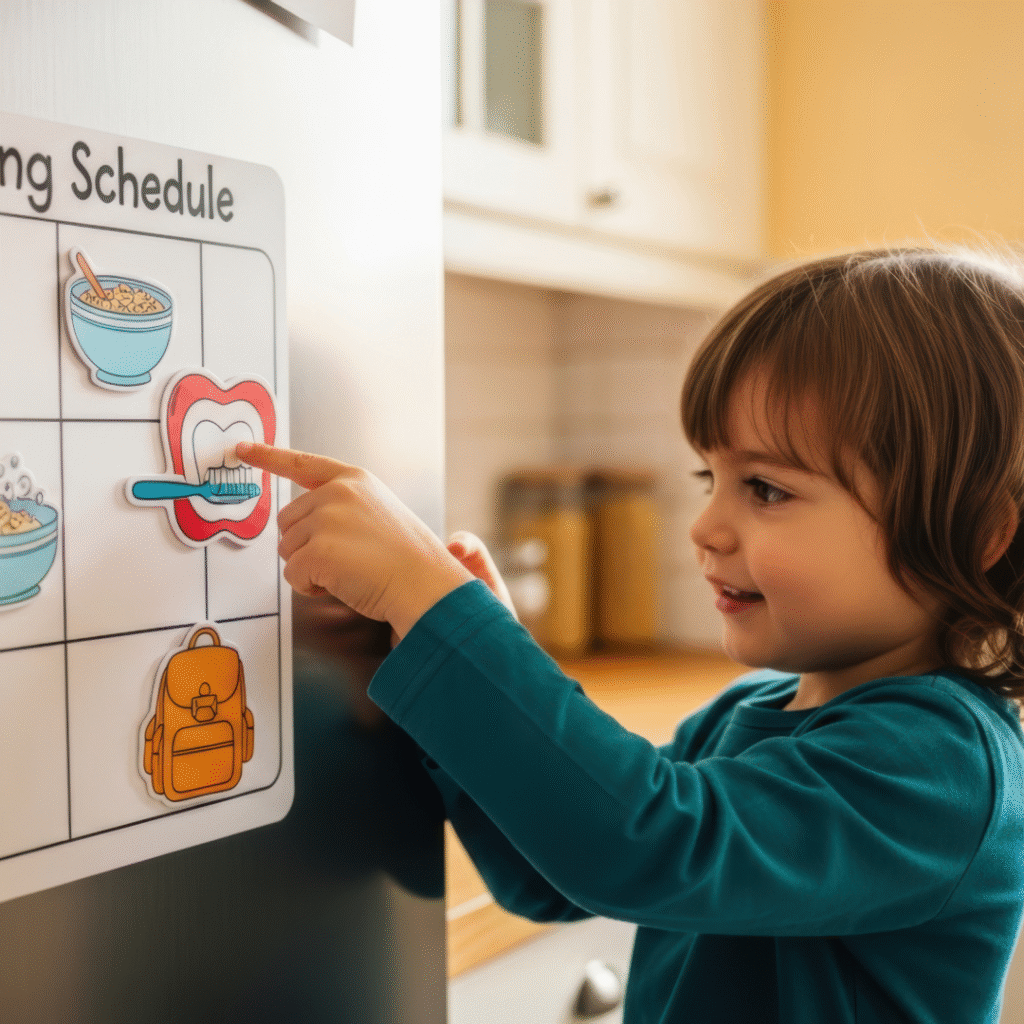
Visual supports can be incredibly effective during post-holiday transitions. They help children understand what’s happening now and what’s coming next — reducing anxiety around the unknown.
Common transition supports include:
Visual daily schedules
First/Then boards
Countdown timers
Transition cues paired with positive reinforcement
These tools provide clear expectations and allow children to process changes at their own pace.
How ABA Therapy Supports Flexibility & Predictability
ABA therapy focuses on helping children build skills that support independence, communication, and emotional regulation — all of which are essential during transitions.
Through individualized ABA therapy routines, children learn to:
Navigate changes with increased flexibility
Practice coping and regulation strategies
Build confidence during transitions
Understand expectations through clear, consistent supports
ABA therapists collaborate closely with families to ensure strategies used in therapy carry over into the home and school environments, creating consistency across settings.
Supporting Your Child Through Post-Holiday Transitions
Every child transitions differently, and progress isn’t always linear. What matters most is creating an environment that feels supportive, predictable, and responsive to your child’s needs.
If your family is navigating post-holiday transitions related to autism, ABA therapy can provide guidance, structure, and tools that help children adjust with less stress and more success.
You’re Not Alone — Support Is Available
Post-holiday transitions can be challenging, but they’re also an opportunity to strengthen routines, build coping skills, and celebrate growth. With patience, understanding, and the right supports, children can return to structure feeling safe, supported, and capable.
If you have questions about ABA therapy routines or how ABA can support post-holiday transitions for autistic children, our team is here to help.
Contact us today to learn more about how we support children and families through every season of change.